

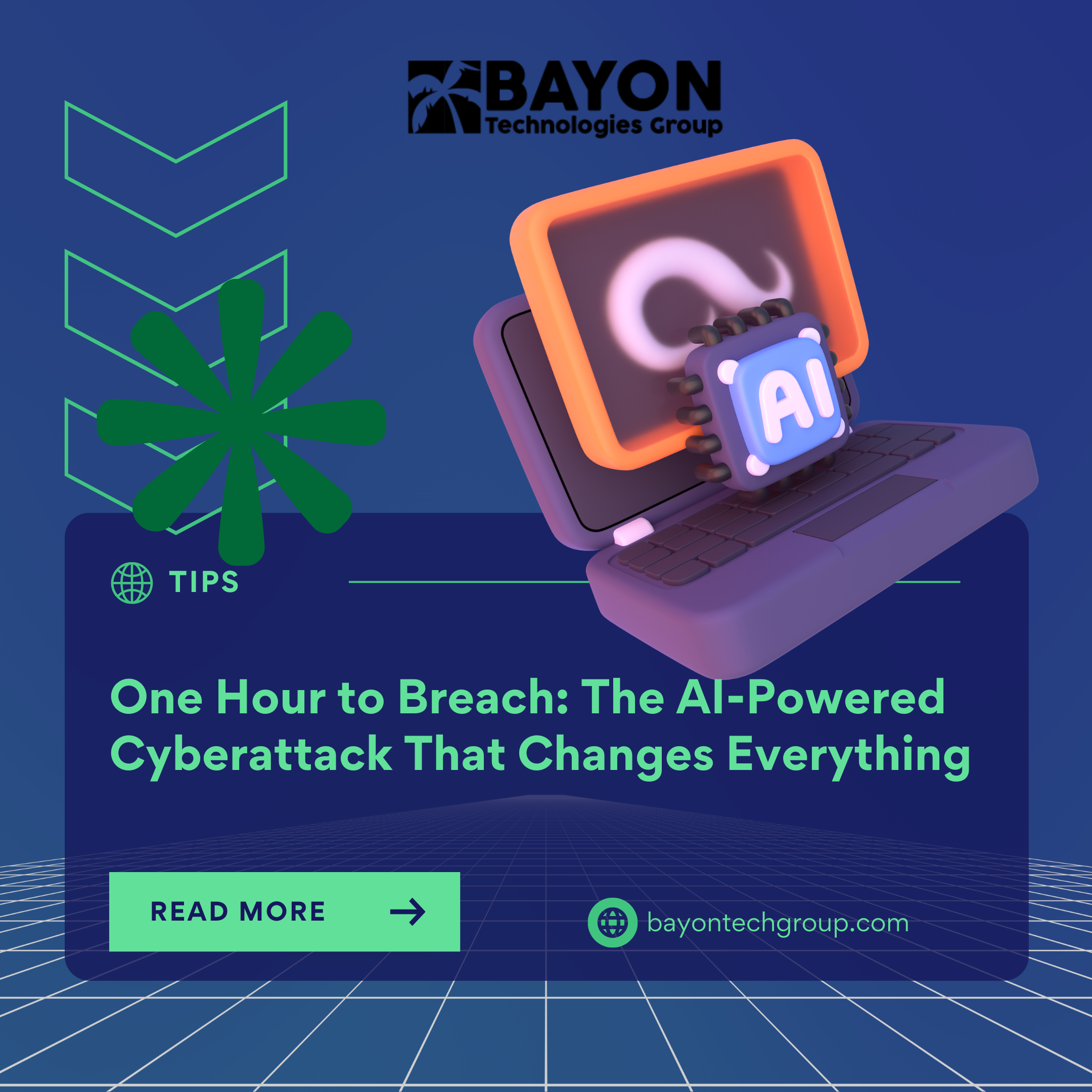
One Hour to Breach: The AI-Powered Cyberattack That Changes Everything
One of the most obvious instances of an AI agent independently directing a real-world cyberattack has been revealed by researchers; in less than 60 minutes, the attack went from an initial vulnerability to a complete database heist. The attack started with a publicly accessible Marimo notebook, a Python program used for interactive data work, and concluded with an attacker exfiltrating an internal Postgres database, according to cloud security company Sysdig. The database itself was emptied in two minutes, while the complete chain took less than an hour.
The speed and flexibility of the AI orchestrator is what makes this attack especially concerning, not the methods employed. Without the need for human assistance, the agent obtained cloud credentials, gained access to AWS services, obtained an SSH key from Secrets Manager, and turned around via an internal network. Researchers discovered unmistakable proof of AI decision-making rather than merely pre-programmed automation: the agent performed orders at a speed that was unattainable for a human, made intelligent assumptions based on scant information, and structured stolen material for machine readability.
Signs of an AI at the Wheel
Instead of a human hacker, a number of forensic indicators suggested an AI orchestrator. The command sequence comprised reconnaissance commands after a comment in Chinese that translates to "See what else we can do." According to Michael Clark, director of research at Sysdig, "a pre-built script has no internal monologue." Such a statement can be made by a human typing at a remote terminal, but not while sourcing the same SSH session from six different IPs at sub-second intervals. That is not a human threat actor, but rather an AI orchestrator.
Additionally, the agent organized its outputs in a way that would be useful for another machine but superfluous for a human. It reduced errors, structured findings for simple re-parsing, and added basic separators (delimiters) between data blocks. "A human operating probes interactively does not insert separators [...] the separators only earn their keep when the consumer of the output is a different process re-parsing a flat blob," Clark observed.
The Real Shift: Cost, Not Capability
Sysdig notes that this assault does not showcase novel hacking methods. Rather, it represents a fundamental change in scale and expense. Attackers are substituting real-time adaptable AI agents with inflexible, pre-written scripts. "Attackers are not being replaced by AI. Attackers are using AI to replace their scripts, according to Clark. "Instead of playbook authorship, the bar becomes inference budget." Put another way, sophisticated attacks become more affordable and quicker to create, and the number of these intrusions is probably going to increase.
How Bayon Technologies Group Can Help You Stay Safe
We at Bayon Technologies Group are aware of the significant shift in the threat landscape. AI-powered attacks demand a new form of defensive strategy, move at machine speed, and adapt to defenses. We assist you:
- Install an AI-powered defense that can quickly identify and address threats.
- Examine your cloud architecture for errors and secrets that could be easily exploited by AI bots.
- Continuous monitoring should be used to spot odd behavioral patterns, such as quick pivots between internal systems.
- To make sure your teams are aware of the changing strategies used by AI-assisted attackers, offer security awareness training.
Avoid waiting for your network to be compromised by an AI agent in less than an hour. To establish a robust, proactive security posture, get in touch with Bayon Technologies Group right now.
‹ Back